

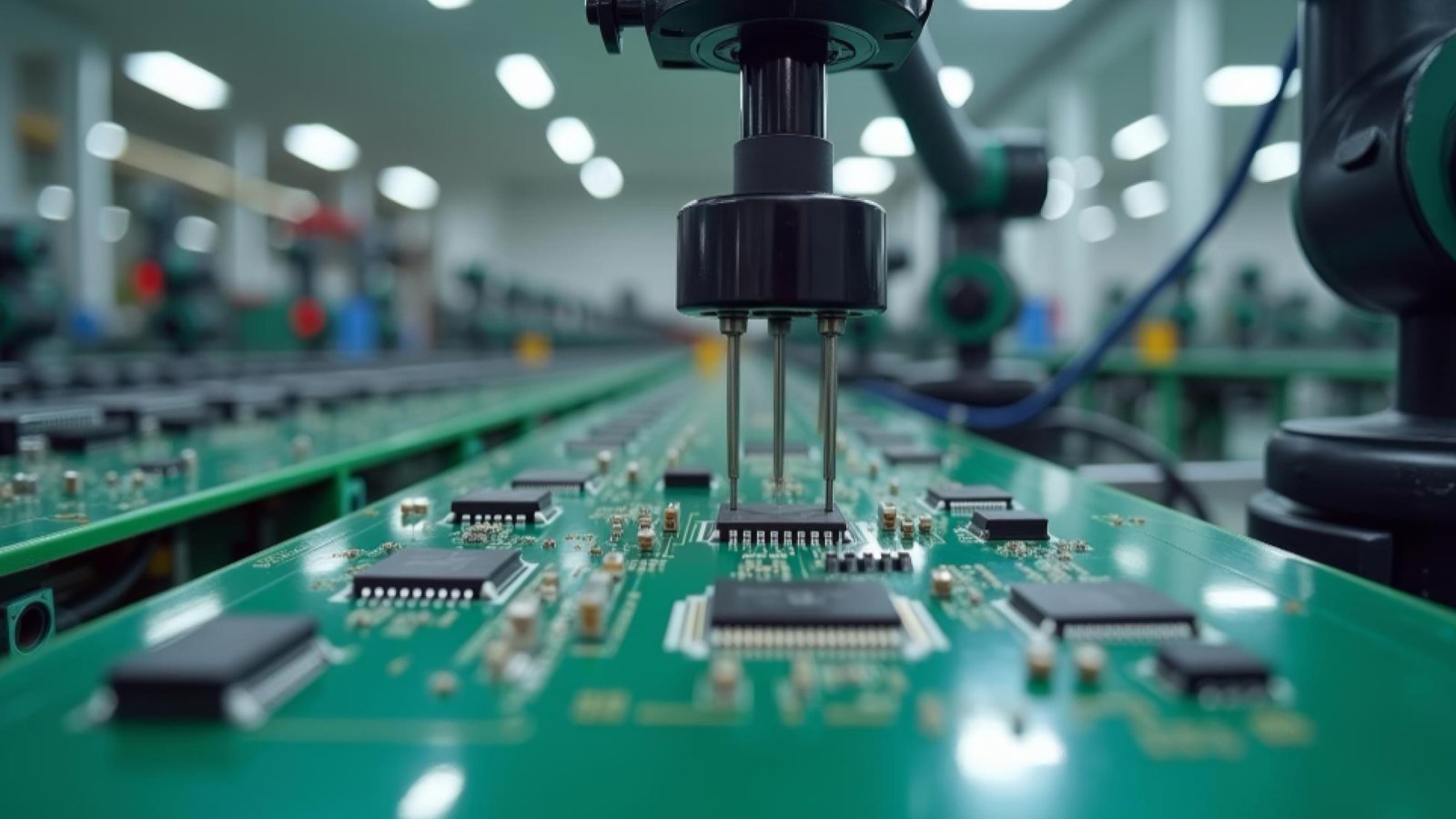
Chips run the world. Ranked as the fourth most-traded product globally after crude oil, refined oil, and automobiles, semiconductors have become the backbone of modern technology. Since late 2020, global chip shortages have disrupted industries, triggered geopolitical ripples, and reshaped supply chain strategies worldwide.
A $1 Trillion Market on the Horizon
The global semiconductor market is projected to touch USD 1 trillion by 2030, growing at an annual rate of 9%. The Asia Pacific region is currently leading, contributing over 50% of global semiconductor sales, followed by North America and Europe.
While the U.S. excels in electronic design automation (EDA), intellectual property, and advanced manufacturing equipment, East Asia dominates wafer fabrication, and China leads in assembly, testing, and packaging.
Where Does India Stand?
India is fast emerging as a formidable player in the global semiconductor ecosystem. With over 19% of the world’s semiconductor engineers, India is poised for explosive growth. According to BCG, India’s chip market will grow from USD 41.2 billion in 2025 to USD 115.6 billion by 2030, at an impressive 18.8% CAGR.
Kaynes Semicon: A Pioneer in India’s Chipmaking Journey
At the heart of India’s semiconductor vision is Kaynes Semicon, a trailblazer leading the country’s charge toward self-reliance and global leadership.
Made-in-India Chips Coming Soon
Kaynes Semicon is preparing to launch its first indigenous semiconductor chip in the 28–90 nm range a segment that accounts for 60% of global chip demand.
₹3,307 Cr OSAT Facility at Sanand, Gujarat
Kaynes is setting up a state-of-the-art Outsourced Semiconductor Assembly and Test (OSAT) facility with a daily capacity of 6.3 million chips. Commercial operations are expected to begin by end of July, placing it among India’s largest chip assembly facilities, significantly enhancing India’s export and self-reliance capabilities.
Leadership in Original Design Manufacturing (ODM)
With proprietary IP and deep expertise in digital technologies, Kaynes Semicon stands out in the ODM space, alongside other industry players like Dixon Technologies, Syrma SGS, and VVDN Technologies.
R&D & Innovation in India
India ranks 3rd globally in semiconductor research output. The country is a leader in auto-component manufacturing, with rising demand driven by EVs and digital integration. Digital Twin technology, a future-forward innovation, is gaining traction in India for real-time monitoring and predictive maintenance of chip manufacturing systems.
Indian firms like Falcon Labs, Paninian, and Pratiti Technologies are at the forefront of developing Digital Twin solutions for industrial automation, aerospace, and clean energy.
Northeast India: A New Frontier
The Northeast region, particularly Assam, is emerging as a hub for semiconductor research and clean energy initiatives. Institutions like IIT Guwahati are playing a crucial role, backed by Design-Linked Incentive (DLI) and Production-Linked Incentive (PLI) schemes.
India Semiconductor Mission (ISM): The Government’s Push Launched in 2021 with an allocation of ₹76,000 crore, ISM is the cornerstone of India’s semiconductor ambitions.
Key offerings under ISM:
- 30–50% financial support for fab units
- Up to ₹12,000 crore per facility for display manufacturing
- 50% support for chip design and IP development
- 30% capex support for compound semiconductors and sensors
With this framework, India is transitioning from focusing solely on ATMP (Assembly, Testing, Marking, and Packaging) to full-scale semiconductor fabrication.
The Global Race: A Window of Opportunity for India
While the U.S. boosts its domestic capabilities with the CHIPS Act (USD 52B), and China has already invested USD 150B since 2014, India’s ₹76,000 crore mission is gaining ground, especially amid geopolitical shifts.
With Section 5949 of the U.S. NDAA proposing a ban on Chinese chips from 2027, India has a chance to become a preferred alternative in the global supply chain especially in chip design and engineering talent.
Auto, EVs, and the Semiconductor Boom
India’s auto-component exports are rising by over 25% annually. The EV sector, growing at 66.52% CAGR, is projected to hit USD 113.99 billion by 2029 further fueling chip demand.
With plans to capture 10% of the global chip market and reach USD 80 billion in exports by 2030, India is building a robust ecosystem for chip innovation and manufacturing.
The Road Ahead
By the end of this decade, India led by visionaries like we, Kaynes Semicon is set to become a trusted chip superpower. With government support, deep talent pools, and industrial acceleration, India is no longer a fringe player, but a core driver of the global semiconductor narrative.
